I am attempting to listen to all of my records in alphabetical order, sorted alphabetically by artist, then chronologically within the artist scope. I actually file compilations/various artists first (A-Z by title) and then split LPs A-Z and then numbers 0-9 with the numbers as strings, not numeric value. But I'm saving the comps and splits til the end, otherwise I have to start with a 7 LP sound poetry box set and that's not a fun way to start.
HEY! Get updates to this and the CD and 7" blogs via Twitter: @VinylUnderbite
14 July 2020
We have moved
Vinyl Underbite continues at a new home: https://vinylunderbite.com. We'll see you over there!
18 June 2020
Lilys - 'In the Presence of Nothing' (spinART)
And so here begins a brief foray into the work of Lilys, a memorable outlier from the 90s white American indie guitardrome, whose work still resonates with me a ton, almost irrationally so as the future keeps on happening. This first album (here sampled as a 1998 repress/reissue with different cover art from the handmade OGs) firmly planted its flag in shoegazer territory, and only hints at its own identity in flashes. It was fine to ape My Bloody Valentine in '92 –– everyone was doing it, after all –– and Lilys on this record really got this bending whammy bar sound, just like on 'To Here Knows When', which I guess is what 'Tone Bender' is about. Said song alternates between a plodding, thick low-end by the rhythm section, and then a lightening up to let some relatively unaffected guitar strings scratch through, and back and forth and back and forth. Lyrics occasionally poke out of the morass, but it's more a feeling than anything to sing along with, and yet this is actually a pretty clear-sounding record that has pretty solid separation between the instruments. The opening cut, 'There's No Such Things As Black Orchids', is practically a MBV homage, but I still love it anyway. Why listen to a record of a band that hasn't yet found their voice? Well, for Lilys/Heasley that's not such a straightforward proposition; after 25 years of loving this band (while also finding something exasperating about them), I can't put into words what makes his music greater than just a clone of whatever was on his playlist at the time, but I know that you hear a ton of it in 'Elizabeth Colour Wheel' (complete with UK/correct spelling, a subtle nod to his Anglophilia for those paying attention). Of course his voice is part of it, a singing tone perfect for being buried in fuzz and reverb, but there's a little more mystery between the effects, as if this band is curious about more than just seeing what sounds guitars can make but you're going to have to work, and infuse your own interpretations of what that might be. The rhythm section is more than competent here; uncredited, but apparently containing members of Velocity Girl. But no member of Lilys is long for being in that band, and being the debut LP is no exception. This is quite a different record than what was to follow (though to be honest, Lilys didn't do abrupt 180s, gradually shifting from sunny hooks towards the dreamy haze of their next record, their masterpiece, into more overtly 60s/mod-influenced pop, into whatever unique hybrid they had become by the time of the major label signing). Sole Actual Lily Kurt Heasley is known as a somewhat difficult figure, a personalty that shifts as much as the sound of his band does. I've never met him but have come to feel he's a bit of a genius in disguise; to dismiss him as a soldier of pastiche is missing the point. The long track here, 'The Way Snowflakes Fall', builds up from a fluid type of group improvisation that would have fit on a Jewelled Antler CDr a decade or so later. It's in this track that I really hear a mastery of what he was trying to do; this isn't a band doing shoegaze-indie music pop to latch onto a trend, but exploring sound expression through the lens of shoegaze-indie. I guess I'm a completely unapologetic Lilys defender now in 2020, and I'm going to gush even more about the next one, but 'The Way Snowflakes Fall', with its static-industrial bedsheets and converging resonance, is clearly more than a band of coattail-hangers trying to flex their long-form muscles.
17 June 2020
Liliput (Rough Trade)
I first read about Kleenex/Liliput through one of those collections of writings about post-punk music that I checked out of the library when younger –– it was either Greil Marcus or Simon Reynolds, and the fact I can't remember is funny because those two writers are pretty different. I swear the article claimed that they invented their own language to sing in, but maybe I imagined that. Anyway, over the years, I've played this Liliput record occasionally, always impressed when I did, but never falling in love with it, and never becoming too intimate with the rest of their discography (which Mississippi compiled onto a 4 LP set awhile back). This is pretty weird and imaginative rock music, though, with start-stop motion made gentler through an awareness of texture and tension. The lyrics sheet is bilingual those most songs appear to be sung in English (with 'Tschik-mo', not printed here, possibly being in another language, but I'm so Deutsch-dumb that maybe I just don't know what German sounds like). This has the distinction of being the first record I have played in a new house/room/turntable setup, and today I'm hearing all screaming mids, the sibilance of the punchy electric bass mixing with guitars occasionally played above the nut or below the bridge. The credits don't indicate a full-time drummer, but percussion is super heavy throughout, with 'Umamm' the fullest expression of this, coming across like a track from My Life in the Bush of Ghosts soaked in ether. The vocals, happy to lurch between language and more guttural shrieks and grunts, have a nice interplay with each other when two vocalists are playing off each other ('Outburst'), and the tempo stays peppy throughout, with the aforementioned 'Tschik-mo' a notable exception, that one pulsing along with a single heavy bass note as the engine, like a clock tower ringing out over a strange wide sky. What sort of world does this band express? Lyrics such as 'Close your eyes, you're as good as lost' suggest a world of psychological despair or a horror show, but then the music doesn't go for easy terror tropes. 'Might is Right' has an almost folky cadence to it, gently sung, and flute as well; the lyrics, an impressionistic structural observation on death and power, reminds me of the kind of lyrics Stereolab could deliver so succinctly in their amazing mid-period; the Euro-accented singing also helps draw this comparison. Over the years my feelings on Kleenex/Liliput haven't changed; this is totally a unicorn, one of those bands that's simultaneously of their time and completely an anomaly, and it's a sound that seems to have influenced few directly, maybe more in spirit. The winding melodies, off-kilter sonorities, and odd intervals all make this band sound like no one else, even in the forty years since that have birthed plenty of avant-rockers employing similar techniques. The sheer oddity of Liliput is not one that is threatening, but it's enough to keep this record perhaps permanently at arm's length, which is a sort of virtue in ways.
Lightnin' Hopkins (Everest)
My father gave me this record years ago when he was culling his own vinyl accumulation. It's a decent compilation on the esteemed Everest Records Archive of Folk & Jazz Music label, adorned with underwritten liner notes that give no indication where or when the recordings come from, as was the fashion back then. Nor does it give any more information about the identities of 'Brownie' and 'Sonny' who accompany Mr. Hopkins, though the internet reveals that they are Sonny Terry on harmonica and Brownie McGhee on the other acoustic guitar. The solo tracks are wonderfully rambling, the opening 'Big Black Cadillac Blues' really more of a spoken word cut than a song, and 'Brand New Car' containing some more extemporising vocals from Mr. Hopkins, also helped by the backing band and 'Big' Joe Williams also on vocals. Plenty of people have studied this music properly, both amateur and academic scholars, and I have little to add as said field is not my forte, except that the rare times I throw this on are immensely satisfying. The joy in Hopkins' music is in the drift, the lurching from a well-sung line to a finger-picked run and back, with everyone loosely circling around a centre that likely adheres to the 12-bar (or whatever) format, without ever feeling rigid. The tracks with Terry and McGhee are the high points –– the version of 'I've Been Buked and Scorned' here is amazing, really something that must be heard to be believed –– and Terry's harmonica chops on 'Drinkin' in the Blues' are wonderfully feral. I might just get an extra special personal pleasure from this because it was from my father (who is still alive, this isn't an elegy), which is probably not so interesting for you to read about, but then again, why write these if I don't bring in my personal associations + reactions to it all? I think compilations like this can still be found for nothing, some of the last remaining cheap vinyl in an age where copies of Fleetwood Mac's Rumours sell for over 20€ (at least over here); there's no shame in the compilation, as so much great traditional and classical musics can be discovered though them. And I'll still take anything on vinyl over a certainly-available YouTube rip of dubious quality, which forces one to endure an advertisement burst before the song starts.
7 May 2020
Lifetones - 'For A Reason' (Light in the Attic)
As rewarding as This Heat's discography is, the projects that formed in their wake offer fertile paths for discovery as well. Hayward's career is well established, and the Gareth Williams Flaming Tunes record with Mary Currie is a quiet masterpiece. But Charles Bullen's work is not as well known, and Light in the Attic's reissue of 1983's For a Reason was an attempt to do something about that. Lifetones was a collaboration with Julius Samuel, a drummer/percussionist who primarily has worked in the dub/reggae genre, and the result is a heavily Jamaican-influenced mishmash of Heat-style textures and rhythmic interplay. The six songs here are not particularly long, but they are packed with movement, a project of studio layering that doesn't strive for tension in the same way as Bullen's previous band did, and therefore is a little bit more approachable (while also not delivering obvious, immediate satisfaction). The opening title track lays down some explicit reggae-ish basslines and rhythms, but with the familiar singing style of This Heat (a little bit droning, and moving slowly through its cadences). This record is full of sounds, each song packed with clanging strings, keyboard lines, and lots of bells and whistles; parts of it sound like a bunch of buzzing clocks. My favourite cut is probably 'Travelling', which employs a Czukay-like bassline under a swirling buzzsaw of strings, overtones blanketing the midrange, staying instrumental until the end, where a few dour lines are sung almost like a coda. There are echo effects on most tracks, sometimes a melodica swirling over a start-stop drum part, sometimes keyboards swelling and receding. The most fruity, splendid parts are layered in way that actually make me think of the band O.Rang (a post-Talk Talk 90s post-rock project), and maybe the My Life in the Bush of Ghosts search for an unworldly pulse, which is found here and mined voraciously. While there's clearly improvisatory moments here, the whole record is just over a half-hour, and there's a lot of control over these songs, which move into ideas, explore them, and then move on without beating anything into the ground. For A Reason has grown on me with each listen, and the brightness of the tonal palette is really remarkable; for a two-man band, there's a tremendous dynamic range here, of course using overdubs to achieve so many laters, but the space between everything stays audible. 'Patience', the closing cut, is driven like most other songs by the bassline, yet somehow recalls hot summer afternoons, and a feeling of childhood. It eats its own tail, guitar, bass, and melodica turning in on each other until it's hypnotic and a bit maddening. Thinking about England in the early 80s and specifically the production work of Adrian Sherwood, I can hear affinities between his work and Lifetones. There's not any aggressive edge here, and besides echo not as many signs of processing, but I wonder how this might have sounded under the Sherwood treatment, and what influence (if any) they might have had on each other. This colourful, eclectic sort of art music was a really beautiful progression out of the post-punk sound, and the connecting lines between records like this and the aforementioned O.Rang would be interesting to discover.
Jason Lescalleet - 'The Pilgrim' (Glistening Examples)
'Sometimes you drive, sometimes you're a passenger.' This is one of the most intense and personal works of avant-garde art that I've ever experienced, and it's actually so extreme in the nature of being personal that I find it very difficult to listen to. I probably played this once when I got it, and once again today. It's not something I'd just throw on when guests are over, or even very often to listen to myself, such is the effect it has on me, one of feeling inappropriately voyeuristic and of course, sad. That said, I would never part with it; it's a beautiful object that encapsulates everything that humanity is capable of achieving through art –– a total expression that is personal, raw, and relatable (if difficult). This record is a tribute by Jason Lescalleet to his father, who passed away in 2005. The first side contains a piece performed live at a festival a few years earlier, inspired not just by the father himself but by how the elder Lescalleet related to Jason's music, understanding it through his own memories of a car ride with his father, Jason's grandfather. The record begins with Jason's spoken introduction, reading out a letter from his father, and then the piece begins, a rumble that attempts to imagine the soundworld of what his father experienced while young. The liner notes explain that he already knew his father was likely to die with two years of creating this piece, and thus this composition ('His Petition') took on immense significance. It's a beautiful blur of sound, with the guttural momentum of a car engine felt but not heard, and the slow sputtering finish taking on a powerful effect given the motif of death that hangs over this record so much. As someone who sometimes struggles to connect with the emotional resonance of abstraction (despite, obviously being invested into the field for years) this really hits me, not just because of the externally-supplied context, but because this is specifically about how to relate one's own work to a loved one, and how your relationship can grow through your art. It's the second side of this picture disc that is the really difficult material, made up of recordings of Lescalleet's father as he was literally dying, deathbed conversations processed and presented as an actual recording of the end. I have to admit that when listening to this, my mind races to go elsewhere, almost as if this material is too personal, not meant for my ears. It's a struggle to focus on the sounds and the language, and my lack of concentration feels disrespectful to the man and the material. So it's odd to write such praise about an artwork that I actually have trouble experiencing, but in some ways, maybe that's the mark of something truly boundary breaking? Words fail me here, as there's not really any way to do this justice for what it means to Lescalleet and its unique status as a form of expression. I would suggest any reader to seek it out, with the caveat that this is not an uplifting experience, or maybe it actually is, but through the presentation of loss as a shared experience, which is best described as inspirational, not uplifting. But not everything should be uplifting, anyway.
15 December 2019
Jason Lescalleet's Due Process - 'Combines XIX, XX' (We Break More)
It appears that Due Process was previously a trio or quartet featuring not just Mr. Lescalleet but also Ron Lessard of RRR/Emil Beaulieu fame and some other collaborators. This is billed as being led by Lescalleet so I've always filed it under L next to his others. But while the first moments of 'Combine XIX' suggest the ringing, haunting resonance of Electronic Music is going to be the vibe here, it quickly combusts into a grab bag of layers and intentionally conflicting ideas, containing some vocalisations even which give it a nice throwback 80s industrial feel. The name of this group draws attention to their working and editing methodology, though I guess almost all music is just 'processing' now, and maybe it always was. The middle drops back to breathe, and it really does, gaining some wind through a chilling, distant echo that started to bring in ringing ghost echoes. It's not a long side, and the short runtime is probably partially responsible for it sounding so good - this is experimental electronic music (you can call it 'noise' even, if you insist) that really has a great mastering job. 'Combine XX' opens the B-side with a wavering, uncentered continuation of the previous side's feel. I'm not sure what the material comes from –– if the processing in question sticks to strict source material, or if it's incorporating the work of other artists, or if it lacks the formally defined rules. But the palette is stark, carefully chosen, for this is the deep listening part of the record. Static is there as on Electronic Music, not so much a foreground element here as a mood, a colouring. About halfway through it fades into a more demonic movement, with an Ash Ra ambience, a pulse that slowly becomes relentless, and disembodied, unarticulated voices that combine with mysterious higher frequencies to resemble a malfunctioning shortwave radio. This is night music, all the way, and the explosive bursts, French accents, and squealing pitches recall the greatest mysteries of the evening sky, transcribed into sound and funnelled through a vision of these Northeastern guys. I tend to overlook this record as it's filed between two bigger 'statements' by Lescalleet, but it's a pretty well-structured and complete work of its own that was really nice to revisit here.
7 December 2019
Jason Lescalleet - 'Electronic Music' (RRRecords)
The title of this, a record that I guess now would be classified under 'early Lescalleet', is deceptively simple. For all recorded music is electronic, and there's surely meant to be a tongue-in-cheek sense of that meaningless descriptor being applied here. The electronics presented here were (I assume) designed and performed by Mr. Lescalleet, and across four tracks he shapes their possibilities into compositions that come to blossom slowly, expanding with cinematic flourishes. This is heard probably most evidently on 'Litmus Tape', the second track, which builds off the static bristles of the opening cut, but introduces a shifting, tonal echo that comes and goes, providing just enough narrative to serve as a central guiding principle. This track recalls third-album Labradford in some way, which is probably the only piece I've heard from Lescalleet that I would compare to them, or anyone else on the Kranky roster. Side two on this beautiful, marbled grey vinyl record begins with the most minimal piece, 'Accidental - Oriental'. This demands intense focus, and it's easy to let the mind wander while waiting for the slow, increasing presence of flickering square waves or whatever electronic sources make up this work. It eventually coalesces into a roar, a hell of a roar actually, one that really shows the full dynamic range of vinyl as it moves between nothing and something so fully over the course of about seven minutes. But it doesn't explode, nor does it seek a cheap soft-loud effect; it just grows and evolves, and then goes away just when I'm about to turn the volume down because the windows are about to shake. This is a hint of the pyrotechnics to come on the last track, 'Beautiful Whore', where the lurching, discordant electronics that are present in much of his other work come to the forfront. Despite the deep-listening lay down of Electronic Music, the tools and palette make him a closer fit to the 'noise' underground, and I'm not just saying that cause this is on RRR and because of the transgressive titling of that track; there's a sense of raw energy here, even though most of the record is quiet, that Lescalleet manages to turn inward and make into something different than a typical amped up banger. The cover art of this record has always greatly influenced my listening of it, and I'm nt sure why. Perhaps the porcelain plate is a good representation of the brittle, carved in fire nature of the sound here; perhaps the bespoke detailing on its rim is an echo of the careful considerations put into Electronic Music's assemblage. Or maybe it's just a nice plate that he saw somewhere and thought looked good.
27 July 2019
Lemonheads - 'It's A Shame About Ray' (Atlantic)
I alluded to in the Lick post about how I think this record holds a special place in the hearts of many people from my age and background. I base this assertion on an ongoing, continual discovery of peers who share a my unbridled love for this record. Which is understandable - it's not only the only consistent Lemonheads album, but it's absolutely the peak of Dando's songwriting power, where a perfect storm (no doubt driven somewhat by his descent into heavy drug addiction) converged and he turned out a bubblegum-punk masterpiece. But it's also a product of its time; that time for me came when I was 13 years old, and my days were spent dreaming of a greater life ahead –– one that would be entirely achieved through music. The alternative/grunge explosion happened and Ray was no doubt a part of it, even though the sounds within are just pure pop, borrowing deftly from other genres (country-rock in 'Hannah & Gabi', folk-blues on 'My Drug Buddy', and a nod to light opera with the cover of 'Frank Mills'). The marketing arm of Atlantic records was clear to position Dando as an alterna-hunk heartthrob and sure, he was fine at that. But I never cared about pin-up mags or pop stardom; to me, Ray was a roadmap to exploring my adolescence through the culture of then-underground white guitar music. The air of mystery surrounding this record evoked more questions than answers (who were these characters: Ray, Fiona, Allison, etc. –– and that mysterious car photograph on the back?) so it felt like a complete world, one that I wanted to dive into. I'd like to say that twenty-five+ years of hindsight have shown this wonder to be superficial, but I still feel something every time I spin this. Expanding my knowledge of music has only brought me around to appreciate this more; maybe he just struck lightning in a bottle here, but I think there's a sophistication to these songs, at least some of them, that can be found after they sink in a bit. It's a nostalgia trip, sure, but the way I've shared this nostalgia with peers who grew up in different places and different environments says something about the connecting power of music through subculture, something that has likely been eroded by the Spotify generation. I don't even know if I have specific memories of this record, or more general ones; of being 14, taking the bus to the University campus and walking around the buildings, sneaking into the computer labs, looking at magazines and records in the various independent shops. Looking at the fashion I aspired to ape – Doc Martens boots, carefully-curated t-shirts, the choices that declared 'indie' rather than hippie or metal or punk, while conveniently overlooking that this record was on Atlantic. Dreaming of finding love, or rather companionship, and wondering if there was someone out there like the woman on the cover, with a minimal approach towards style, a take on femininity that rejected make-up and hairspray, and an intellectual sophistication that could be conveyed through the symbols revealed - backpack, shoes, haircut. I didn't model myself after Evan Dando, not in the slightest, as I think even then I found his cute-dumb smile annoying; I loved It's a Shame About Ray despite Dando, and still do. Even back then I had the pre-'Mrs. Robinson' version of the CD, and now I have the LP which also omits that unlikely hit, and that's the only way I know this record. Was I 'starting to happen' at this time? Absolutely, and I wonder now when I stopped.
16 February 2019
Lemonheads - 'Lick' (Taang!)
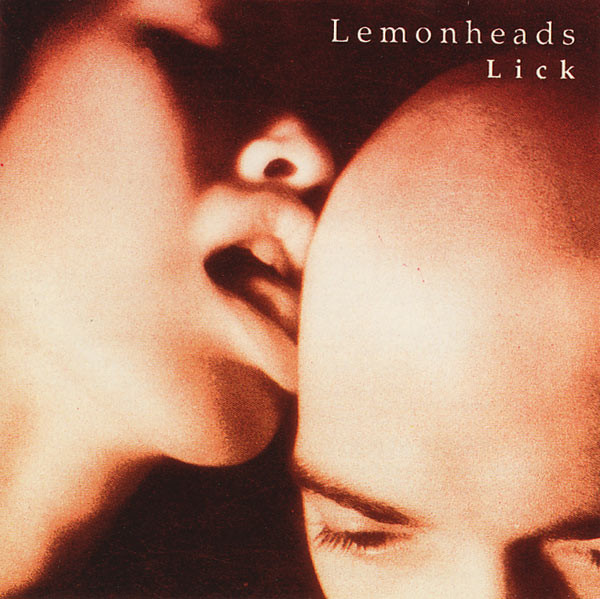
The Lemonheads mean way more to me than they should, but I suspect a lot of people of my demographic cohort (white middle class American born 1980) feel the same way. None of this has much to do with Lick, or their other earlier records, but everything to do with the one that comes next (in this project, not Creator). But Lick has stuck around in my collection for awhile because I get a kick out of it, though there's only a few songs to justify keeping it. I think Ben Deily's songs are generally OK though the Lemonheads of course improved when he left and the Juliana Hatfield lineup happened. Some early Deily punkers such as 'Second Chance' are pretty great, and 'Ever' is his gem here; but Lick starts to bring in the jangle on Dando's songs, which are reaching towards the beauty he'd find later, so the distance between the two as songwriters is really made more evident. Deily's are just kind of a mess here – the Italian language 'Cazzo di Ferro' is bad throwaway soft metal, sounding like what happens when pop-punk bands try to get heavy (the post-Descendents band All is often guilty of this); '7 Powers' is driven by his reedy voice and a savage guitar solo, which disguises the fact that it's not so well-writtenng. 'Anyway' approaches replayability, but it's a stretch as well; we have to wait to 'Ever', the closer, for his peak. But Dando here really starts to shine. His gentle drawl, when combined with the amped up energy behind opener 'Mallo Cup', makes instant punk bubblegum magic; that's one of the best Lemonheads songs and the best song on the album, so it's a shame it comes first. This is the one with their cover of Suzanne Vega's 'Luka' on it, which starts with a 'noise' guitar intro and gets pretty crunchy during the choruses; it is not one of my favourite Lemonheads songs, but I guess the one that people remember most from this record. After 'Luka' though, it's hard to get through the next few songs until 'Ever' arrives, but maybe I'm just excited to get through this LP so I can write about the next one that's on deck. The real joy of Lick comes from flipping over the cover and looking at the band photo on the back, which sums up the Lemonheads perfectly. They're young as hell, and cute, and just a little bit of faux-tough there too; they could be a youth crew band or a Christian rock ensemble, and that also sums up the musicianship – they could have gone in a lot of directions, and on this record they started to.
Lemon Kittens - 'We Buy a Hammer for Daddy' (United Dairies Produce)
The Lemon Kittens only made two records before disbanding, though Danielle Dax went on to a somewhat more renowned solo career. It's a shame, because their art-school outbursts feel remarkably prescient in 2019, and (to my ears, today) especially British. United Dairies released this, and there's certainly a feel that is closer to early Nurse With Wound than anything appearing on Rough Trade at the time, although it's far more song-based and rock in nature than Chance Meeting. I hear the undeniable influence of the Residents, at least in tone and instrumental interplay ('The American Cousin' and 'Rome Burning' could be featuring Snakefinger as a guest musician, though everything played on this record was either Blake or Dax), and there's an energy in the more madcap tracks that definitely is fuelled by some frustration, even there aren't overtly social-leaning tendencies in the lyrics. More reference points can be teased out (Beefheart, early electronic composition, probably Throbbing Gristle) but it's not necessary to place this into a lineage, even though that's my vestigial habit. Time has been extremely kind to We Buy a Hammer for Daddy, and this feels like a crucial piece in that wonderful, fertile period of British music where the avant-garde collapsed onto rock forms and a lot of weird stuff snuck through the cracks. Today's pop scene, at least the kind of pop that gets written about in publications such as The Quietus, surely has the same sense of freedom and juxtaposition, though I feel far closer to older material, personally. And there's just so much going on here, vocally especially ('Motet' is just magic, where Dax/Blake have a pretty great interplay that complemented each other well). Even the loose and exploratory parts (side two opens with 'Pain Topics', which flutters around under the shouted vocals and razorblade guitars, which eventually cascade into a wall of sound) feel like they have a vision, a pathway towards something that is never without consequence. Furthermore, it feels like a balanced duo – I don't know enough about either musician outside of this record, so I shouldn't make this declaration, but I feel like this is a pure 50/50 mix between their two personalities. There's a wonderful world envisioned here, and I want to explore it.
30 January 2019
Leadbelly (Archive of Folk Music)
There's something 'problematic' about Leadbelly, right? I mean, he did kill a guy, and John Lomax basically turned him into a star and got his sentence commuted (or something). Or was the relationship between Lomax and Leadbelly what was problematic - Lomax took all the cash, exploiting him, or something like that? I definitely read something somewhere about this being problematic once, but I prefer to write these posts just from my memory instead of actually looking up the facts, or the prevailing opinions in this case, so I'll just assume that somewhere in this story is some controversy. None of which affects my enjoyment of listening to it. This anthology was released about two decades after his death and there isn't any info about how its culled. Most of these recordings sound pretty 'field', even when they are clearly in rooms, almost like he's been recording in the prison cell. My copy of this is filthy and beat to hell, so it's perfect, like a 78rpm only at 33 (and that's what these are sourced from, 78s, I assume). This is the stereo edition, so audiophiles will probably grumble, but they wouldn't enjoy a record as battered as this anyway; beyond the dirt and scratches on the vinyl, the cover has some water damage. I think I got this from my father, or maybe a garage sale. So, the music – I daresay that Leadbelly might be a bit underrated, actually. For while he's been established and canonised plenty, in recent times he doesn't seem to get talked about as much as other folk/blues guitarists from the 20s and 30s, at least not in the texts that turned me onto this music in zines and online publications in the early 00s when the indie/experimental kids like me all went searching for some roots. His guitar style, while not the most dazzling in terms of fingerpicking complexity, is really rapid, to the point of being frantic, and it's usually a 12-string so it sounds extra crazed. 'Green Corn' and 'The Gallis Pole' have some zigzag chording that's really propulsive, driving his manic yelps. Vocally, Leadbelly sounds more earnest than mysterious, and there's a spirit of fun in the more fast songs, like 'Looky Looky Yonder Black Betty'. Opening cut 'The Bourgeois Blues' drops a few n-bombs and lays down a socioeconomic commentary that's still powerful, and a bold choice to open this collection. No doubt his recordings have been packaged and repackaged numerous times and this is far from being representative, but something about the weariness of the beat-up record itself (and the water damage on the cover, even) makes this feel like the right (correct) way to listen.
28 January 2019
The Lavender Flu - 'Mow the Glass' (In the Red)
The sophomore effort from the Lavender Flu finds them congealing into a quartet (unlike the first double LP which is Chris Gunn + whomever) and tightening things up, while still leaving room for a ragged, open feel. This is heard right off the bat with 'Follow the Flowers', a total banger that provides the killer hook (something I felt was missing from Heavy Air) in its chorus. By also recording the whole thing in a proper studio, it's definitely a 'real' rock album, the product of a band that may be driven by Gunn's idiosyncratic vision, but remains sonically diverse. There's a haze that covers every track, or maybe it's more like a thin, wet film. Something, anyway, is coating the sound, and it's not lo-fi or murky, but rather a welcoming, comforting place that allows the shimmery guitar effects, background vocals, and guest pedal steel to combine for a maximally psychedelic effect. Yeah, there's that word again, so hard to avoid. Listen to the outro of 'Reverse Lives', where the song fades away into a pond of organic tones - it's electric, without being aggressive, and held in place by the really punchy bass playing. We get another Townes van Zandt cover ('Like a Summer Thursday', a song I always really loved), given a sprightly and optimistic injection, and an Eastern workout ('A Raga Called Erik') that perfectly segues into 'You Are the Prey', with the most shoegazery sound on the record in its intro. Gunn is still happy to hold his vocals back - the cohesive band feel doesn't like a blantant stab at commerciality, and by the end of it (a normal length, unlike Heavy Flu), Mow the Glass has picked up a melancholy, or perhaps an air of resignation. The other cover, Jackson C. Frank's 'Just Like Anything', contributes to this downer feel, despite the bouncy feel of the drumming. I am reminded again of Sic Alps and their West coast psych sound, which maybe was more influential than anyone would have guessed. Gunn's vocal delivery is similar to Mike Donovan and the guitar worship is of a similar ilk - fluttery, jangly, and affected. This builds to a crashing climax with 'Ignorance Restored', a track that could feel like a battle cry or summation except I'm already so satisfied by the rest of the record before it even gets there that I haven't even really digested that one yet. Mow the Glass was one of the high points of last year, a year in which I didn't buy too many records (couldn't afford to, really), and felt further away from 'new' music than ever. But now, if a proper band, that means Lavender Flu probably play concerts and I'd love to see them.
27 January 2019
The Lavender Flu - 'Heavy Air' (Meds)
I don't feel guilt about the non-diversity of this vinyl accumulation, or even see my tastes as homogenous. Someone recently said something to me about the whiteness of it all, which pissed me off a bit. I was quick to point out that despite being largely rooted in rock and folk, there is a proliferation of jazz and other black American forms here, as well as African and Asian indigenous musics – plus other outliers. What he really meant to say was that because I don't really like reggae and have few hip-hop or soul records, and my vinyl accumulation is so heavily weighted towards rock, that it was somehow racially problematic. Fuck that. We like what we like, and we like what we grow out of, and I come from a background that led to a heavy interest in indie, post-punk, and psych. This is a weird intro to write about the Lavender Flu's first album, a double LP collection that I would cite (along with its followup) as one of the finest examples of modern-day psychedelia. I bring up the whiteness of my records because this record definitely comes from the same lineage that I do (Flu leader Chris Gunn was a member of the Hunches, whose last album is a brilliant slice of post-garage energy), and that's probably a lot to do with why I like it; no one would describe this as 'urban'. This made me think about the very word 'psychedelia', which most people would probably use to describe Heavy Air, and what it even means anymore. It might be best to retire this term, unless you're using it to describe a very precise and historical time in rock music (like 13th Floor Elevators or the Nuggets collections). I don't hear many thowbacks to that era in the Lavender Flu, except for the cover of Bo & the Weevils 'My Time' here. Heavy Air is a lot to take in, and it's a bit of a mess by definition - a 'kitchen sink' approach that mixes half-formed songs, full-formed songs, and bedroom experiments into a lengthy sound quilt. The band name is apt - colourful and lush, but also with an undercurrent of instability. A lot of these tracks wobble on their hind legs, and even the more straight-forward presentations have a detuned viewpoint, not intentional obfuscation but just a nice, new angle. There's a few covers here - the Godz, Townes van Zandt, and John Fahey, but these are given the Lavender take. Home-fi techniques abound, though overall there's a clarity in the soundstage that avoids this being murky tape-piss, but also has an intimacy. A lot of these tracks are Gunn with just one other musicians, rather than a cohesive band (that comes on the next record). The scraps, on their own, wouldn't add up to much, but as incidental pieces tying together a whole it gels, and these smaller movements don't feel like throwaways, or even like there are two tiers of composition on the record. Whispered spoken voices, melting bells, reverberating string plucks, slow-paced rock drumming, droning organs, tape treatments that sound like birds – from this description and the length of this, it might sound like I'm describing some Elephant 6 style band, like the first Olivia Tremor Control record. But while Gunn is no stranger to melody, earworm hooks are largely absent, making this a pleasant mystery of a record that demands repeated listens. Overall it's quite an accomplishment, feeling like the summation of a lot of things that have been happening on the West Coast in the past decade. Scott Simmons, who put out this record, plays on a lot of tracks and also had a hand in Eat Skull and Helen, and the relationship between the three can be felt despite the different applications. Yes, it's white music, 30 tracks of it, and it's pretty fucking great.
12 January 2019
Ken Lauber - 'Contemplation (View)' (Dynamic)
I've known this record for a few years but only recently realised its title come from a popular translation of the I Ching, at least popular at the time this was made (1970). A friend recommended this a few years back when we were both discovering music from the country-western genre and particularly lonely obscurities of the late 1960s-early 1970s. This isn't actually that obscure or lonely, nor is it even super country-fried. It's a Nashville album though, or close enough (recorded in Madison, TN) and it's driven by Lauber's raspy, smoky voice and his piano (even though he poses for the back cover with a guitar). As 'alternative country' artists go, at least among those who existed before that term did, he's from the piano-driven honkytonk side as opposed to the outsider/freakazoid scene. But despite the piano being his instrument, Contemplation (View) is nothing like Terry Allen, leaving behind (for the most part) narrative cleverness in favour of sweet romantic wistfulness and a hint of new age stargazing. At least I pick that up in both 'Wander On' and 'Far I Will Travel'; there's a similar openness to darker numbers like 'Undertow'. 'The Disabled Veteran' is the one foray into narrative character building and it's a little bit much for me, but more genre-leaning cuts ('Mama, It's such a Long Ride Home', for example) are such solid band efforts that they could be cover versions and I mean that in a good way. I've listened to this a fair few times over the years and it's always a pleasant, rollicking dip into the country-rock sound, a template taken straight from Dylan's Nashville Skyline, of which this bears a shocking resemblance to. The Gray Speckled Bird Band (actually listed as the Gray Speckled Bird Brand, but I assume that's a typo) are pretty hot though, assembled I think from mostly session guys and some members of Barefoot Jerry. Bassist Wayne Moss is one of the strongest forces, as his confident walking and thumping holds together the whole unit and he brings a subtle uncertainty to 'Mama', playing the notes with a bit of hesitation or nervousness. There are guitars everywhere - steel ones, dobro, and regular - some of which are played by Nashville legends, I have no doubt. Lauber's cadences are sophisticated and his underwhelming vocal delivery takes away any commercial edge this might have had. I guess the guy made some more records but I've never heard them, nor do I ever think to seek them out. But Contemplation (View) has stayed in focus for so long because there's a certain raw honesty in these songs, heard immediately in the first line of opener 'When I Awake', and carrying through its entirety.
7 January 2019
Last Exit (Enemy)
I wonder what motivated this 'super group' to form - who phoned who, where the inspiration came from, etc.? Were Peter Brötzmann and Sonny Sharrock just hanging out one night and decided that the world needed more hot, swampy electric freak fusion music? If so, they were right; or at least the world of 1986 sure did, and maybe in 2019 (despite having more music available than ever, despite the nature of streaming having transformed music itself into something disposable for the majority of people, despite the plethora of niche choices available to all reducing if not outwardly eliminating the idea of 'obscure' or 'inaccessible') we do too. Last Exit were the greater than the sum of their parts, I think, and the group is unimaginable without any of the four members, so prominent are their contributions, almost perfectly balanced. Yet somehow, Ronald Shannon Jackson's drumming is the crucial element here. Even though no other guitarist sounds like Sharrock, no other saxophonist quite sounds like Brötzmann, etc., I could at least deign to imagine this record with, for example, Fred Frith instead of Sharrock; and that would be probably pretty great too. But if you swapped out Jackson for another drummer, even a great drummer, it would fundamentally change the group so much because his propulsive, machinelike approach is what most thrusts this record away from any semblance of swing or blues and into tortured, primal viscera. This is made clear about two seconds into 'Discharge', the opening cut, where the drums sound like gunshots and everyone is thunderously blasting notes to the point where it becomes a sort of drone, though one with a punchy staccato texture making it up. 'Backwater' seems to pull things down a notch, with a skittery interplay between Brötzmann and Sharrock around a spacious atmosphere. The feeling is of a cold storage locker, steam rising from dirty urban manholes, and a hopeless pallor over everything. It builds to a full-band freakout, and while Last Exit resemble jazz occasionally in the sense that there are solos and no vocals and a saxophone, they resist showy musicianship or navel-gazing noodling. There's no shortage of notes being played, most of all by Laswell, on an electric six-string bass, but it's perfect for this band. I was out with my parents recently and I saw a fusion trio play, who were led by an electric pianist, with a drummer and six string electric bassist (I won't name names here). It felt like endless samey talk show background music, and despite my best efforts to enjoy it I could not. The motivating drive of those musicians seemed to be to cram as many notes as possible into each composition, without any regard for personal expression or musical diversity. For me, growing up PUNK (or at least PUNK-adjacent), I subscribed to all sorts of clichés about jazz and chop-based music, a result being there were instruments I considered acceptable to play and ones that were not. The six string bass was clearly banned from my teenage idea of good taste and the trio I saw with my parents illustrates why. But Laswell, who has occasionally overstepped his boundaries in other projects, demonstrates on Last Exit precisely why it's childish and reductionist to dismiss any sound, and why my favourite era of musical discovery was when I learned to cast off my PUNK-adjacent hangups. When Laswell enters the soundspace (with Jackson) on 'Red Light', his technique is a torrent of thumping physicality that would be unimaginable on any other instrument, and it's awesome. Especially on vinyl, which emphasises low-end in a way that CDs never can. All of the churning and grinding within these songs is still driven by tempo and rhythm, rather than tone, and while chaotic, it never feels messy. The first side alone is near-exhausting to listen to closely, and the second in no reprieve. But that's what I want here - thunder, acrid smoke, sharp edges, and something sinister glowing beneath it all.
26 July 2018
Steve Lacy - 'Solo - Théâtre Du Chêne Noir' (Emanem)
This solo sax LP, recorded live in concert as the title indicates, opens with 'The Breath' which was the closing cut on the previous record under review here, Moon. Stripped of the Franco-Italo-Swiss band, the composition is barely recognisable, though it is much more clearly a 'tune' in this form. Emanem is a label I associate with Derek Bailey and the most idiom-destroying musicians of the 1970s, so it's somewhat interesting how much of this LP stays around a compositional frame. But then again, that's Lacy - free as hell on Moon (and after all, he played on Cecil Taylor's Jazz Advance way back in '55) but ultimately one who was looking to extend jazz through composition and experimentation. Solo is thus a tight concert; while not exactly traditional standards, it's only on side two opener 'Josephine' that Lacy gets into some extreme techniques. There's a part of that piece where he's squeezing the sax to the point of no return, asymptotically approaching silence but leaving the faintest escape route for his breath. It's man vs. very small machine and the machine almost wins, and you could hear a pin drop in the room as he does it. Actually, for a live record of solo sax this is recorded well, exceptionally so in a genre that usually is well-recorded to begin with. It was a (certainly hot) August night in 1972 and that tense room energy is felt as you often hear on live records, in the echo and reverb through the room behind each breath. But there's nary a shuffle or peep from this crowd, as they were edited out (assuming there was anyone there to applaud in the first place), apart from the briefest moment at the end before a quick fadeout. The compositions start to blur together but Lacy brings out a honking assonance in a few places that made me question if this was all soprano, such was the grit behind it. Other segments are sinewy and untouchable, darting around like an angry insect fleeing a structural flyswatter. Technical mastery, sure, you know already he established that a decade prior, so now it's about hearing him unadorned. The closer, 'The Wool', seems to be the most complete piece, a modal tune that drops into extended breakdowns and keeps coming back to itself. 'Stations' employs a radio in the most John Cage-like fashion and it's a suitable improvisatory foil for Lacy; 'Cloudy' keeps the static running which integrates well into the blowsier parts of the sax playing. The liner notes are clear, explaining who they are dedicated to (Roswell Rudd, Gil Evans, etc.), and there's a concluding paragraph about the nature of solo sax concerts, crediting Anthony Braxton in particular with 'open[ing] the way', and even claiming that they are 'easy'. Nothing sounds easy to me but that's because I once tried to play a soprano sax and struggled to get any sound to come out of it. Like all the other solo sax records in this accumulation, I don't think to pull this out much, but there's something remarkable about the way this was played, recorded and presented.
Steve Lacy - 'Moon' (BYG Actuel/Get Back)
This is a far cry from The Straight Horn of Steve Lacy, as it's anything but straight. Moon hails from a period where he was immersed in the Italian free jazz scene (recorded in Rome, 1969) and features a bunch of European musicians who I'm not really familiar with. His wife, Irene Aebi, appears on cello and does vocals on 'Note', which is one of the more memorable cuts not just because of the staccato, one-word lyrics but cause of its whirlwind start-stop madcap nature. Jacques Thollot is on the drums - I only know him from Sharrock's Monkey-Pockie-Boo record and otherwise more as a name – and he clatters and whoops throughout. The overall momentum of this feels closer to the scratchy bending and hacking of the Spontaneous Music Ensemble than much American free jazz going on at the time. The front line being clarinet and soprano sax means we're locked firmly into the upper register, and the bass and drums are fluid enough that it feels like a lot is missing from the centre. Aebi's cello isn't always so present, or it's played in such a way that it's hard to distinguish from the bass. There's generally a thump-thump bassline behind most cuts, probably most melodically on closing cut 'The Breath', but the whole record feels pretty scrappy. 'Moon' is where things get a little loopier, and the swirls of breath and string start to bend and form a parallax effect. The whole thing goes by rather quickly, and it's absolutely uncompromising in its style. Not a full-breath blowout by any means, but maybe that's just due to the limits of the instrumentation and the way that Thollot plays. Drummers can have a huge effect on these matters. Lacy is front and centre on the cover photo but in the mix he's all over the place, darting through the corners of the soundstage and coming to the forefront furtively, only to slip away as he pleases. This is music that plays against itself continually, twisting against a centre that keeps escaping. I'm not sure what this record's reputation is but it's a demanding listen, despite having a light touch. Somehow it feels unique from other Euro-free records of the period, but maybe that's just because Lacy is such a singular player.
11 July 2018
Kuupuu - 'Yökehrä' (Dekorder)
This is a compilation of earlier releases by Kuupuu and it hews closer to other Finnish underground music of its time than some of the later work by Kuupuu (Jonna Karanka) and related projects. There are many names from the Finnish scene of this time (2002-2005), some of which have dissipated into our distant memories (The Anaximandros, anyone?) and others which are still active, though quite different in today' s incarnations (Avarus, Kemiälliset Ystävät). All certainly bring to mind a certain vibe, and that vibe, to me, is 'small' - short form pieces, often just sketches, recorded and left to lie and marinate rather than be overworked. Kuupuu, at least in these earlier recordings, has a certain delicacy to her approach and I'm finding it perfect for this evening's imminent sunset. Acoustic sounds are prevalent and these compositions are more content to move forward slowly, if at all. There's a tendency towards space and texture, and the sequencing is well-chosen here, breaking up the running order from the original cd-r releases and reassembling here. The home-recorded nature of Karanka's work from this time sounds great when transfered to vinyl and I guess it's thanks to Dekorder doing a solid job with the mastering, as usual. When there's hiss and tape noise around the material, it somehow sounds grandiose and important on wax. When she uses her voice, especially on side 2 ('Pihlajapuu', 'Tuli Uni'), it's all breath and transference, mixing with the hiss to be wordless or essentially so. More recognisable melodies on squeezeboxes and keyboards peer out but don't overstay their welcome. In lesser hands this could come off as hackneyed goth music, but there's a really personal vision which seems to abstractly convey experience, which is all I could ever want from music. Her later work becomes a little denser, and more focused on motion in conjunction with texture, specifically the music's own internal ebb and flow. One could probably argue that Kuupuu recordings also become more distinct later on, and that the pieces on this record are more simple or somehow less developed. But there's a care evident here, a sculpting that isolates her from any traditional musical precedents while also situating her work as part of a movement.
10 July 2018
Fela Ransome-Kuti And The Africa '70 With Ginger Baker – 'Live!' (Signpost)
Afrobeat meets British jazz here, or at least Ginger Baker sits in on a second drum kit to make this collaboration. This is the only Fela Kuti record I own but I've heard a lot of those classics from the 70s, and this sounds more or less in line. Tony Allen is a formidable enough drummer that Baker is probably only adding accents and thickening; it's panned a bit so you can get some separation, and this has a pretty excellent sound for a live recording from the time, though there's no credits as to when or where this recording was made. Baker is explicitly introduced by Kuti, who speaks between each of the cuts, and when Baker starts to tap about on the drums, Kuti quickly says 'That's enough, that's enough' and moves into the next song ('Ye Ye De Smell'), which is supposedly written for Baker because he does NOT in fact smell. It's some good natured ribbing I'm sure but Kuti makes it extremely clear who's in charge, as if there would be any doubt. 'Smell' is a banger though, but they are all, of course. This album came out in '71 so it's actually one of Kuti's first releases, and they're already playing a well developed form of their music here. Four songs, opening with the nicely named 'Let's Start' and and propelled by Kuti's shouts and sax, Igo Chiko's fiery solos and of course the drumming, from not just Allen and Baker but the small army of congas and other percussion instruments. There's a long electric piano solo on 'Black Man's Cry' that is also uncredited - no keyboards officially appear on the album, unless it's some sort of insane guitar technique. It's just before he climax of the record building up with the clattery guitars until it just stops and leaves some space for Kuti to begin soliloquising again. When the theme comes back in towards the end (it's a twelve minute piece), with trumpets and sax ringing in harmony, it feels at once like a beautiful orchestrated pop song and the rallying, radical cry its title implies. The final cut is the most somber, being midtempo and transferring all of the polyrhythmic shuffling to be between the beats, though somber for Fela Kuti is maddeningly energetic for most others. Titled 'Egbe Mi O (Carry Me I Want to Die)', it builds to a 'Hey Jude'-like wordless chant, which while sung by the entire band and presumably live audience, attains a wistfulness which is only echoed by the exuberant trumpets. The bands builds it up under this, until it's a somewhat distorted wall of sound, coming back to a lovely theme as is the formula.
Subscribe to:
Posts (Atom)